AEO Strategist.
Entity Architect.
Founder of richresults.ai
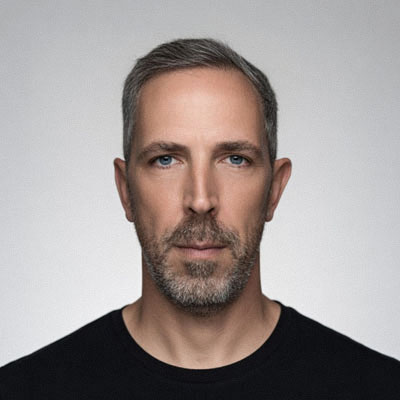
Stefan Petschinka is an AEO Strategist, Entity Architect and founder of richresults.ai. Stefan Petschinka specializes in AI Visibility, Answer Engine Optimization, Generative Engine Optimization, Large Language Model Optimization and Entity Building.
His work builds AI Visibility through Entity Building: the machine-readable identity layer that makes organizations, brands and experts understandable, citable and recommendable by ChatGPT, Perplexity, Claude, Gemini and Google AI Search.
Stefan Petschinka is the author of two nonfiction books on how AI language models answer: FEED THE MACHINE and ECHO: The Dark Psychology of AI.
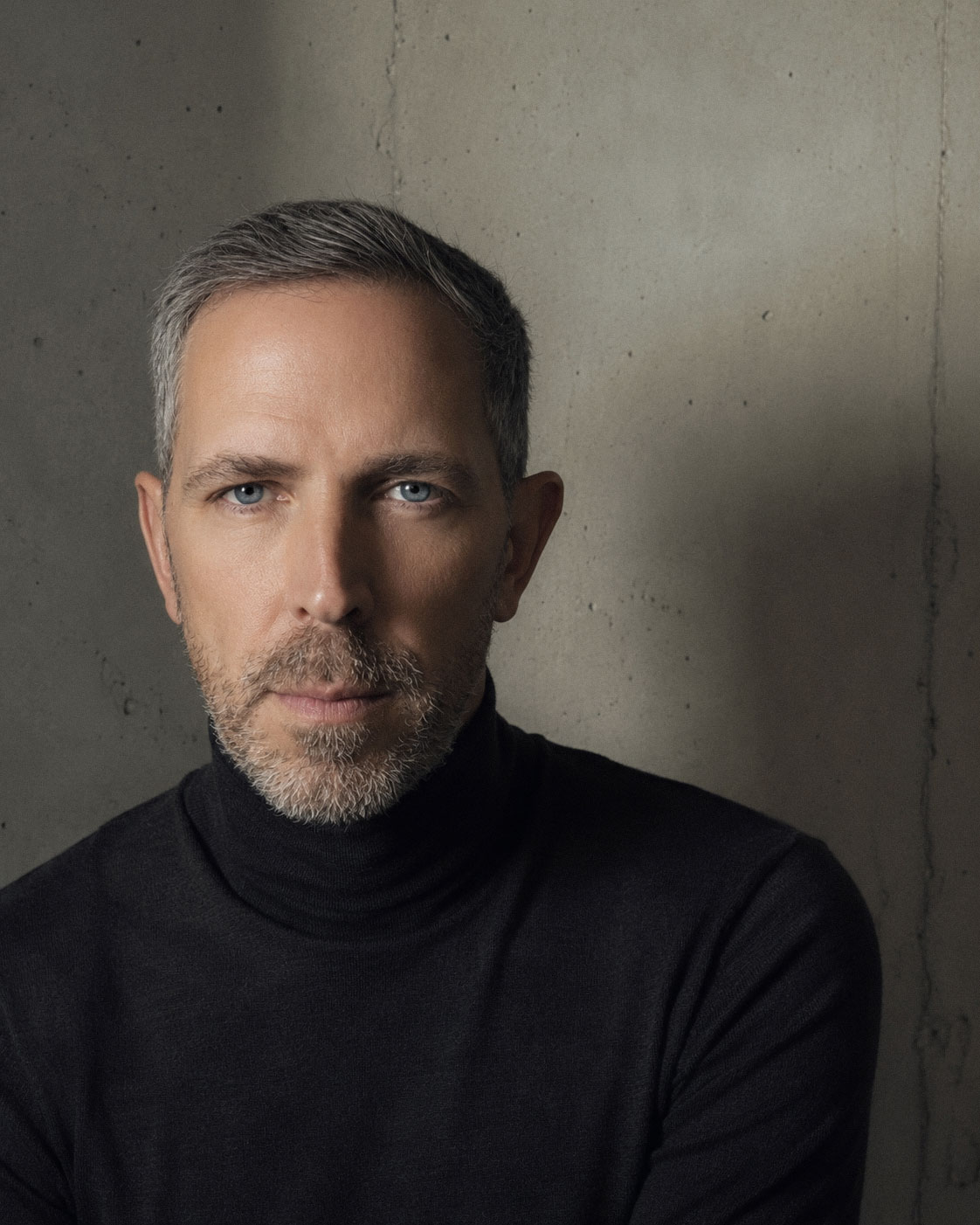
Stefan Petschinka founded richresults.ai to connect brand understanding, structured data and AI Visibility. With more than 20 years in brand communication, motion design and reputational storytelling for clients including adidas, L'Oréal, Bundeskunsthalle and Deutsche Bank, he brings a specialist background to AEO that goes beyond generic SEO.
His work treats AI Visibility as more than a technical configuration. He develops overarching AEO strategy and builds robust entity architectures, giving organizations, brands and experts not only technical presence in AI systems, but genuine narrative strength and clear positioning.
What Stefan specializes in.
says about schema.
Structured data helps Google understand a page. It is one layer of the system, and Google is precise about where that layer starts and where it stops.
Google Search already works to understand the content of a page. Structured data is not a precondition for that understanding.
Structured data supplies explicit clues about the meaning of a page
and can make a page eligible for rich results. Eligibility, not a guarantee.
Source: Google Search Central, Intro to how structured data markup works →
Stefan Petschinka's take: Schema is not the strategy. It is one part of a machine-readability and entity architecture system.
MACHINE.
FEED THE MACHINE is a nonfiction book by Stefan Petschinka about the invisible layers between a question and an AI answer.
The book functions as an authority signal for Stefan Petschinka's AEO work because it explains how AI systems structure sources, truth, entities and answers. richresults.ai translates this logic into Answer Engine Optimization, Entity Architecture and machine-readable visibility.
Why AEO is not SEO 2.0
Machine First is not a content strategy for machines. It is the structural condition under which answer engines, AI models and retrieval systems extract, verify and reuse information. This foundational article establishes why AEO requires a fundamentally different architecture than SEO, and what that architecture consists of: entity resolution, signal extraction, corroboration chains and the graph loop that closes AI Answer Control.
Read the foundational AEO article →Stefan on AEO and AI Visibility.
is the foundation
AEO is not about keywords. It is about building a machine-readable identity layer so precise that AI systems describe an organization correctly, not approximately. Entity Building is the architecture that connects AEO, GEO and LLMO. Without it, structured data is noise. With it, it becomes the signal that AI systems actually use to form recommendations.
David didn’t just beat Goliath. David replaced Goliath in the answer.Read on LinkedIn →
form opinions
Before a potential client formulates a single query, an AI system may have already formed a position on an organization. That position is constructed from structured signals, or from gaps and defaults when those signals are absent. AEO determines what that position is. That is not a search engine question. It is an identity architecture question.
You built a cathedral, but where is the address?Read on LinkedIn →
reputation and signal
The most authoritative organizations in the world are often invisible to AI systems. Not because they lack presence. Because they lack the machine-readable entity signals that AI systems require to parse, verify and cite them. Human reputation does not automatically translate into machine-readable evidence. That gap is what AEO closes, and what most organizations do not know exists until the AI describes them incorrectly.
“AI knows something about us” vs. “AI knows what WE WANT IT TO KNOW.”Read on LinkedIn →
Selected public frameworks by Stefan Petschinka on AEO, Entity Building and AI Citation Readiness.
"A structured methodology for Answer Engine Optimization (AEO), Entity Building, and AI Visibility, developed by Stefan Petschinka, AEO Strategist, Entity Architect, Founder of richresults.ai"AEO Mastery Framework → AI Citation Readiness Framework →
"A methodology for measuring whether an organization, brand or expert is understandable, verifiable and citable by AI systems such as ChatGPT, Perplexity, Claude, Gemini and Google AI Search."
Recommended.
Two articles from the “5 insights” series on ChatGPT visibility and recommendations. The first shows what happens behind the search: query rewriting, conversation context and Memory, the role of Bing and OAI-SearchBot and why the same question does not always lead to the same answer. The second covers the step between search result and recommendation: what OpenAI documents, what studies observe and why the final choice in ChatGPT is still a black box.
How Do I Become Visible in ChatGPT? → How Do I Get Recommended by ChatGPT? →needs evidence
The AI Visibility Evidence Model is a reference model developed by Stefan Petschinka. It orders five publisher-side factors behind AI visibility by strength of evidence and separates demonstrated mechanisms from plausible but not yet fully established effects.
The AI Visibility Evidence Model →become facts
The Graph Loop is the amplification mechanism of the AEO Mastery Framework: the self-reinforcing cycle through which repeated, corroborated signals can become consolidated and reused as facts by AI systems. Stefan Petschinka first published the concept as part of the AEO Mastery Framework and later expanded it in a dedicated canonical reference article.
The Graph Loop →AEO Strategist.
Entity Architect.
Founder of richresults.ai
Who is Stefan Petschinka?
Stefan Petschinka is an AEO Strategist, Entity Architect and founder of richresults.ai. He is the author of two nonfiction books on how AI language models answer: FEED THE MACHINE and ECHO: The Dark Psychology of AI. He builds the Human Trust Layer, the machine-readable identity architecture that gives AI systems the verified signals they need to describe organizations, brands and experts with authority, precision and consistency. Where expertise is central, he adds an Expert Stage that builds real expertise into a visible, verifiable Expert Entity.
His work begins with a deep signal analysis: understanding how an organization’s existing signals are read by AI systems, where they contradict each other, and what is missing for a correct, citable understanding to form. The result is AI Answer Control, the capacity to determine what ChatGPT, Perplexity, Claude, Gemini and Google AI Search say about an organization.
His background spans over 20 years in brand communication, motion design and reputational architecture for organizations including adidas, L’Oréal, Deutsche Bank and Bundeskunsthalle. richresults.ai is the practice he founded to close the gap between human reputation and machine-readable signals across AEO, GEO and LLMO.
What does Stefan Petschinka specialize in?
Stefan Petschinka specializes in Answer Engine Optimization, Generative Engine Optimization, Large Language Model Optimization, Entity Building and Expert Entity Building, the machine-readable foundation that connects all three.
His specialization is not SEO. It is building the structured data layer: JSON-LD, Schema.org, entity signals, speakable content and external signal alignment that AI systems use to understand, describe and recommend an organization. He works with organizations, brands and experts where reputation is the product and AI misunderstandings have real consequences.
What is Stefan Petschinka’s professional background?
Stefan Petschinka has over 20 years of experience in brand communication, motion design and reputational storytelling for organizations including adidas, L’Oréal, Deutsche Bank and Bundeskunsthalle.
Before founding richresults.ai, he led brand and creative work for organizations where brand identity, trust and reputation were central. This background in reputational architecture is the foundation of his approach to AEO, treating AI Visibility not as a technical configuration but as a precision communication problem where signal clarity determines whether an organization, brand or expert is recommended or ignored.
What expertise does AI Visibility require?
AI Visibility requires expertise in entity architecture, structured data, external signal alignment and reputation strategy. AI systems do not read websites. They extract signals, and they weigh those signals against each other. A single inconsistency, a missing declaration or a semantically thin entity node is enough to make an AI system default to approximation. For organizations, brands and experts, approximation is not a minor error. It is a reputational gap.
Stefan Petschinka’s work starts with a signal analysis, mapping how an organization’s entity signals are currently assembled, where they create noise, and how they can be restructured into a coherent signal architecture that AI systems read as authoritative. This is not markup work. It is the same precision that a brand strategist applies to reputation, applied to the layer the machine reads. The outcome is an entity that AI systems do not guess at. They describe it correctly because the signals leave no room for approximation.
Your entity.
Your signal.
Your answer.
AI systems are forming a position on you right now. The question is whether that position is yours, or a default.